Reaching the Ending
The Bills Must Be Paid ending is not the moment your save is finished—it is the point where the final completion phase opens. After defeating King Piggy and paying Taxes, choose Keep Playing instead of immediately declaring bankruptcy. This preserves your current run so you can buy the expensive late-game upgrades required for full completion.
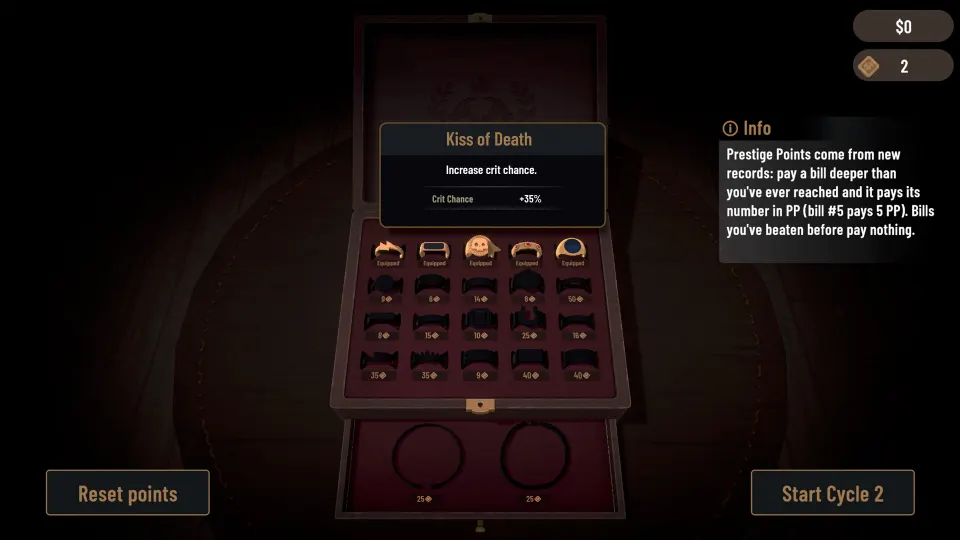
The game’s main loop is built around paying escalating bills by smashing Piggies, improving your hammer, and buying temporary Skill Tree upgrades. Eventually, a cycle becomes too expensive to sustain. Bankruptcy then turns the total value of bills you paid into Legacy Points, which purchase permanent Rings and Bracelets for later cycles.
For a standard ending, your immediate objective is simple:
- Reach and defeat King Piggy.
- Pay the Taxes prompt that follows the fight.
- Select Keep Playing.
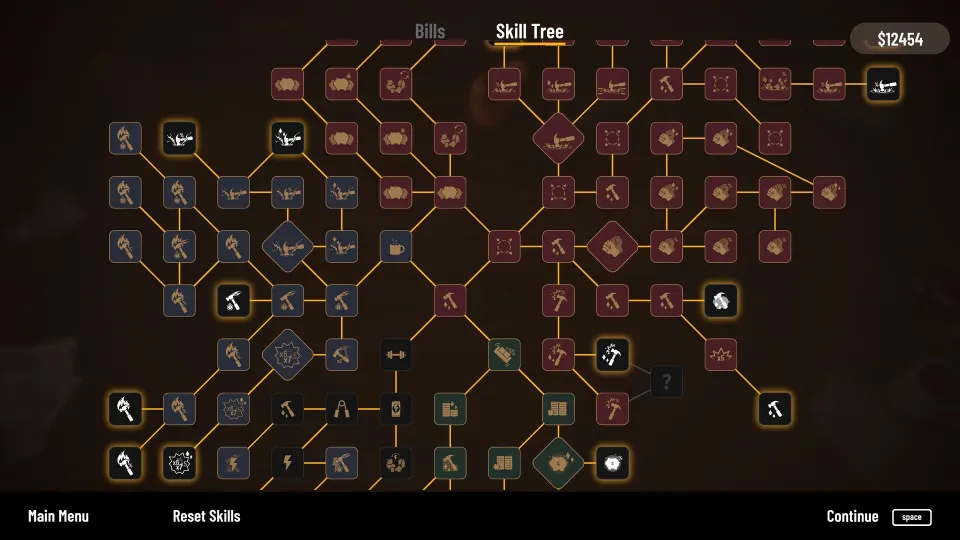
- Finish the post-game Skill Tree, including the nodes needed for Maxed Out.
- Declare bankruptcy only after the current-cycle objectives are complete.
Choosing bankruptcy directly after Taxes does not ruin the save, but it removes temporary progress before you can use the post-game opportunity. Players pursuing every achievement should treat the ending as a checkpoint rather than a reset prompt.
| Ending milestone | What it means | Best action |
|---|---|---|
| King Piggy defeated | You have cleared the main boss encounter | Continue to the Taxes sequence |
| Taxes paid | The core ending sequence is complete | Select Keep Playing |
| Post-game unlocked | Late Skill Tree branches become available | Spend toward Maxed Out |
| Final bankruptcy | Temporary run progress is converted and cleared | Buy remaining permanent jewelry |
Why Keep Playing Matters
Keep Playing is the most important choice in the final sequence. Your current cash, hammer, temporary gadgets, Piggy unlock progress, and Skill Tree purchases remain available while you continue the run. That momentum is what lets you afford the final branches of the tree.
The late-game tree can be expensive, but the post-King Piggy economy is usually much stronger than an early-cycle build. Resetting first forces you to rebuild the entire run before you can return to those purchases. It is generally faster and safer to spend the current run’s surplus immediately.
The Maxed Out achievement is the key reason not to reset. It requires completing the relevant Skill Tree progress, including late branches that are inaccessible before the ending sequence. Once bankruptcy clears the tree, you must recreate that run state to finish it.
Before your final reset, check that you have completed the following current-cycle goals:
- The normal Skill Tree and the post-game branches.
- The King Piggy fight and Taxes ending.
- Every available Shop purchase you need for collection progress.
- Piggy unlocks and Coin Collection objectives.
- Any current-cycle achievements, especially Maxed Out.
- Remaining bill-sequence milestones.
| Goal type | Lost during bankruptcy? | Recommended timing |
|---|---|---|
| Cash and temporary upgrades | Yes | Spend before the final reset |
| Hammer and gadgets | Yes | Finish related collection tasks first |
| Skill Tree progress | Yes | Complete Maxed Out before resetting |
| Piggy progression in the run | Yes | Finish relevant unlocks first |
| Rings and Bracelets | No | Buy with Legacy Points after resets |
| Coins | No | Collect whenever opportunities appear |
A final bankruptcy is still necessary for full completion because permanent jewelry is purchased with Legacy Points. The important distinction is that bankruptcy should come after the post-game checklist, not immediately after the apparent ending.
Preparing the Winning Cycle
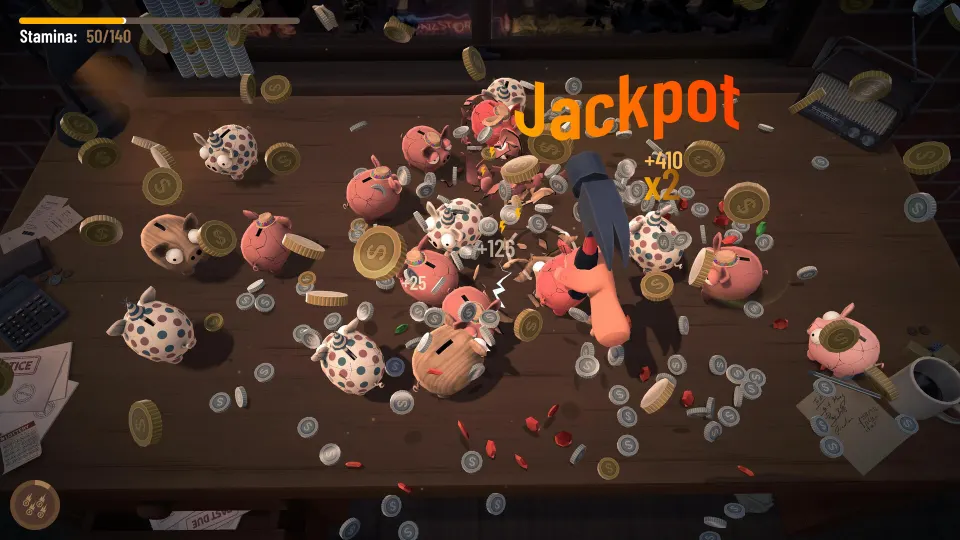
A strong ending run begins well before King Piggy. You need enough income to pay bills while still buying upgrades that improve damage, spawn rate, stamina, and loot. Spending every dollar on upgrades can make the desk stronger in the short term, but missing a bill stops the cycle.
Use a protected bill reserve. Subtract the next bill from your total cash before deciding what you can afford to spend. If you have $320 and the next bill is $200, only $120 is truly available for upgrades unless a purchase immediately improves your ability to survive.
Your upgrade choice should respond to what is happening on the desk rather than following one rigid build. A desk with no targets needs more Piggies; a desk full of durable targets needs more damage. If Piggies remain when your hand runs out of stamina, stamina is the limiting factor.
| Desk condition | Primary bottleneck | Useful upgrades |
|---|---|---|
| The desk is often empty | Spawn rate | Starting Piggies, spawn nodes |
| Piggies survive many hits | Damage | Damage, crits, stronger hammers |
| Targets remain when stamina ends | Stamina | Maximum stamina, restoration |
| Kills are consistent but income is low | Loot | Luck, double loot, Midas-style effects |
| Piggies overlap often | Hit coverage | Hit Radius, collateral effects |
Early cycles are also the best time for accuracy achievements. The starting hammer swings slowly enough to aim deliberately, while later attack-speed upgrades make accidental empty swings more likely. Complete achievements such as a perfect run or consecutive perfect runs before heavily investing in speed.
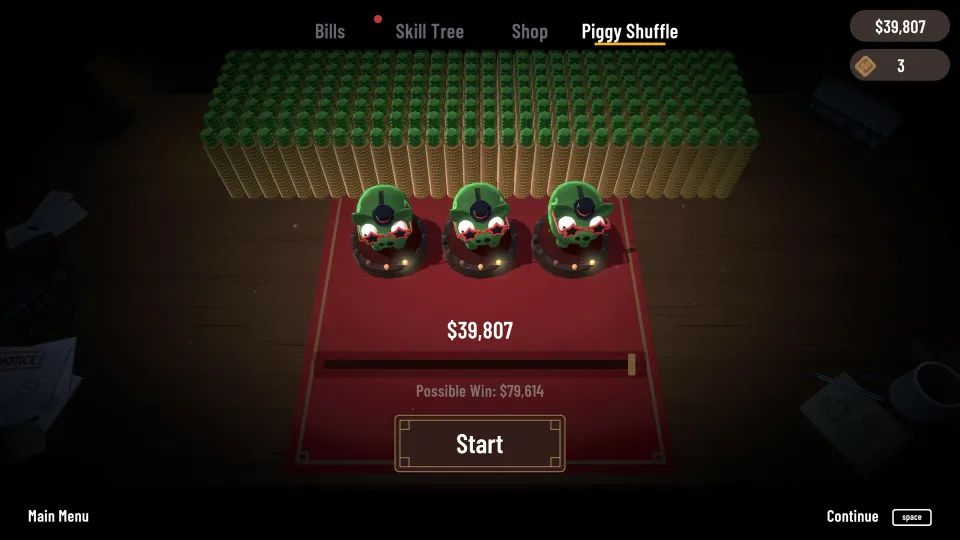
Avoid treating gambling minigames as required progression. Double-or-nothing and Piggy Shuffle can provide a dramatic boost, but they can also erase money reserved for a deadline. Use disposable cash, not your protected bill reserve. A risky attempt can be worthwhile for an achievement, but repeated losses can turn a winning cycle into a bankruptcy.
Bankruptcy, Legacy Points, and Completion
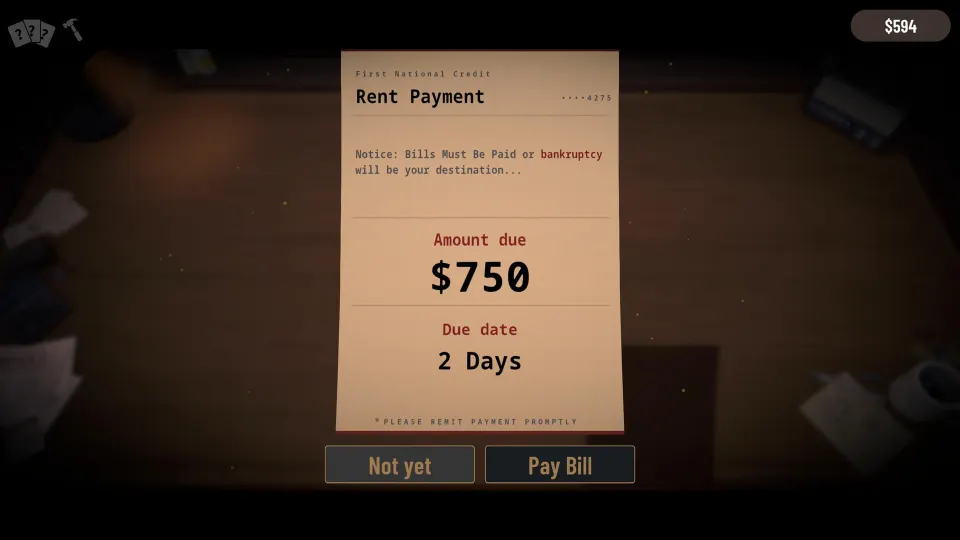
Bankruptcy is a progression tool, not a failure screen. Each $50 paid in bills earns one Legacy Point, based on paid bill value rather than leftover cash. Money sitting in your wallet when you reset does not improve your Legacy Point total.
That makes a controlled bankruptcy more valuable than a panicked one. If another bill is safely reachable, paying it can increase permanent progression. If the next requirement is clearly beyond your build’s income, do not sacrifice a guaranteed Prestige result chasing an unlikely recovery.
A practical cycle plan looks like this:
| Cycle stage | Main purpose | Priority |
|---|---|---|
| First cycle | Establish permanent power | Pay reachable bills and earn initial Legacy Points |
| Second cycle | Handle awkward achievements | Accuracy, early-hit, loan, and minigame goals |
| Strong late cycle | Reach King Piggy and Taxes | Unlock collections and complete the main ending |
| Post-game | Finish temporary progression | Buy late Skill Tree branches and earn Maxed Out |
| Final reset | Complete permanent progression | Purchase remaining Rings and Bracelets |
Spend early Legacy Points on broad improvements that make every cycle smoother. Permanent damage, starting Piggies, stamina, and loot all help rebuild quickly after a reset. Rings that reward early bill payment can be powerful later, but they are less useful before you have enough spare cash to pay ahead of schedule.
Loans from Big Toni can bridge a one-time bill gap or help complete loan-related achievements. They are not free money: their costs can cut into future profits. Use a small loan when it closes an immediate, realistic gap, then repay it before the high-income portion of a strong run. Taking a loan simply to gamble for a miracle usually delays the ending.
Completion often takes several cycles. A five- or six-cycle route can be perfectly normal, especially when achievement attempts, unlucky loot, or cautious budgeting slow the run. Additional bankruptcies do not invalidate the ending or damage permanent progress.
FAQ: Bills Must Be Paid Ending
Can you continue after the Bills Must Be Paid ending?
Yes. After defeating King Piggy and paying Taxes, select Keep Playing. This lets you continue the current cycle and purchase the late-game Skill Tree branches needed for completion.
Should I declare bankruptcy after paying Taxes?
Not if you still need Maxed Out, late Skill Tree purchases, Shop progress, or other current-cycle goals. Bankruptcy clears temporary run progress, so finish those tasks first.
What is the true ending requirement?
The central ending sequence is defeating King Piggy and paying Taxes. For full completion, continue afterward, finish the post-game Skill Tree, then use a final bankruptcy to purchase remaining permanent Rings and Bracelets.
How are Legacy Points earned?
You gain one Legacy Point for every $50 paid in bills during a cycle. Unspent cash does not count, so paying a safely affordable final bill can be more useful than holding money at reset time.
Is bankruptcy a failed run?
No. Bankruptcy is the game’s Prestige system. It clears temporary progress but converts paid bills into permanent progression currency, making future cycles stronger.
How many cycles does full completion take?
There is no fixed number. Some players finish quickly with favorable drops and efficient routes, while others need five or more cycles. What matters is completing temporary goals before the final reset and permanent jewelry afterward.