Build Fundamentals
A strong build turns each swing into reliable bill money instead of a brief burst followed by an empty desk or exhausted hand. The best approach is not one permanent upgrade order: it is matching your next purchase to the problem that ended your last normal run.
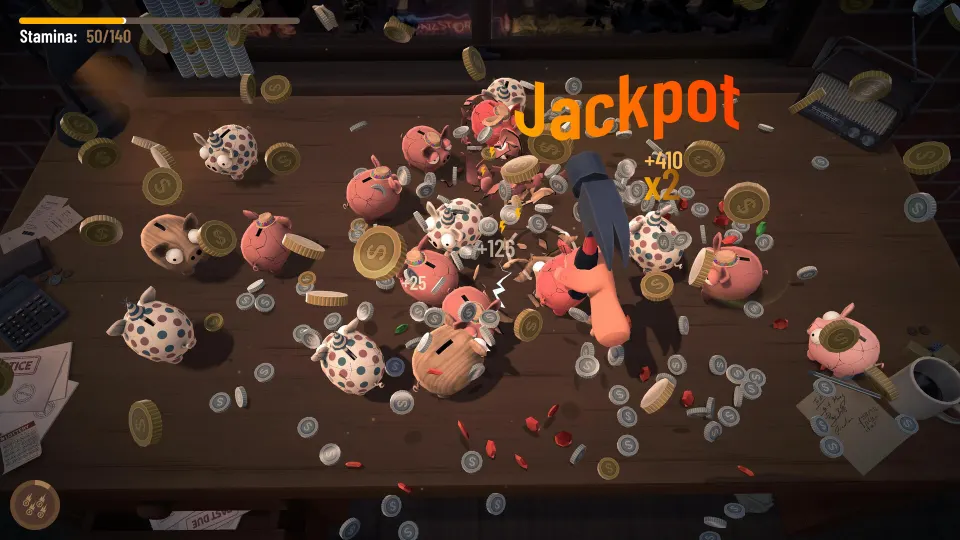
Bills Must Be Paid is an active incremental game where smashing piggy banks consumes stamina. Cash must cover upcoming bills while also funding temporary upgrades, hammers, gadgets, and skill-tree progress. Bankruptcy resets most current-run power, but paid bills create Legacy Points for permanent Rings and Bracelets.
Your build needs four things working together:
- Enough damage to break current piggies quickly.
- Enough targets that swings do not wait for spawns.
- Enough stamina to use the targets available.
- Enough loot scaling to keep up once bills rise faster than basic combat upgrades.
Do not judge a build by one Jackpot-filled run. Look for the same problem across two ordinary runs before spending heavily. A lucky payout can conceal weak damage, poor target density, or a stamina shortage.
| What happens during a run | Actual bottleneck | Best build response |
|---|---|---|
| The desk is empty with stamina remaining | Too few targets | Starting Piggies, Spawn Rate, target-creation effects |
| Piggies fill the desk but take many hits | Insufficient damage | Base Damage, crit stats, stronger Hammer, collateral damage |
| The run ends with breakable piggies left | Too little stamina | Max Stamina, lower stamina drain, stamina restoration |
| Kills are steady but income misses bills | Low payout scaling | Loot, Luck, glowing effects, Midas-style bonuses |
| One durable piggy blocks the table | Missing damage breakpoint | Hammer upgrade, direct damage, crit damage |
The early goal is a balanced loop: there is usually a piggy available, it dies in a reasonable number of hits, your stamina lasts long enough to use the desk, and the money earned protects the next bill. Only after that loop works should you chase major scaling effects.
Early and Midgame Upgrade Path
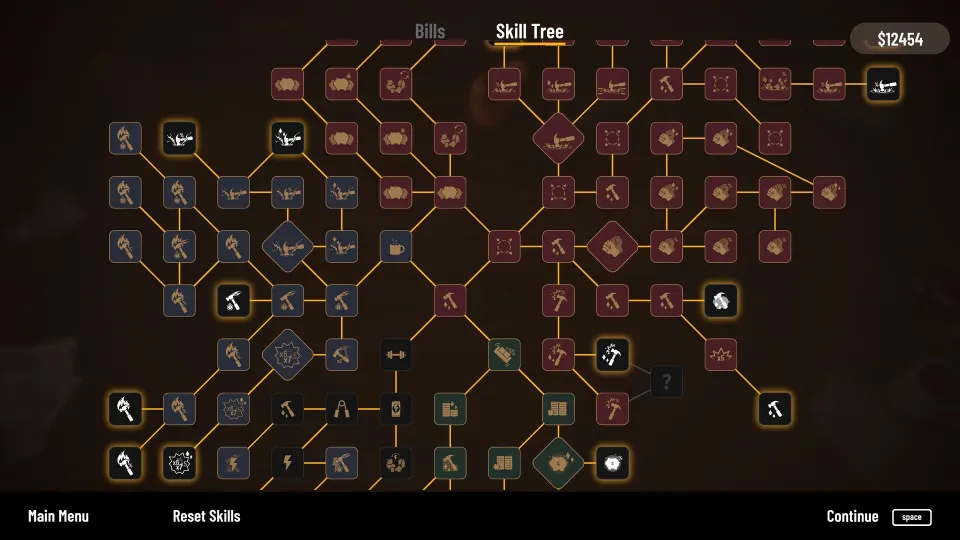
Start by making the opening piggies manageable. Base Damage is usually the safest first investment because reducing hits-to-kill improves every later combat stat. Take a useful stamina upgrade early, then add Starting Piggies only when you genuinely clear the desk before tiring out.
Attack Speed looks universally useful, but it can be a trap in the opening cycle. Faster swings add little when there are only a few targets. It can also spend stamina sooner and make accuracy achievements harder. Buy it after your desk stays populated and most current piggies already die quickly.
| Upgrade type | Buy it when | Delay it when |
|---|---|---|
| Base Damage | Current piggies survive too many direct hits | Enemies already die quickly and the desk is empty |
| Attack Speed | Targets remain available and stamina supports extra swings | You are waiting for piggies or missing due to speed |
| Starting Piggies / Spawn Rate | You clear the table with stamina left | The desk is crowded with high-health piggies |
| Stamina / lower drain | A run ends with killable targets remaining | You frequently run out of targets first |
| Hit Radius / Collateral Damage | Piggies overlap often | Targets are spread out or damage is too low |
| Loot and Luck | You consistently destroy enough piggies | Basic kills are unreliable |
| Stronger Hammer | A new piggy tier creates an HP wall | Your current hammer still meets kill breakpoints |
A dependable early purchase sequence is:
- Buy enough Base Damage to stop weak piggies from consuming most of a run.
- Add one stamina improvement.
- Purchase Starting Piggies if the desk empties.
- Take Hit Radius or Collateral Damage once targets cluster.
- Reach the next meaningful damage breakpoint.
- Add Attack Speed only when target supply and stamina support it.
- Shift toward Loot and Luck after combat is stable.
Hammer selection should support the build rather than follow a simple “newest is best” rule. A high-crit, smaller-radius hammer can fit focused damage against durable piggies. A fast, wide hammer is stronger when your build already has enough damage and wants to trigger on-hit, area, or multi-target effects.
When you unlock piggies with noticeably higher health, reassess immediately. More Spawn Rate will not solve a table full of targets you cannot finish. Prioritize damage, critical effects, or a hammer breakpoint until the new type dies reliably.
Bill Reserves, Prestige, and Late Scaling
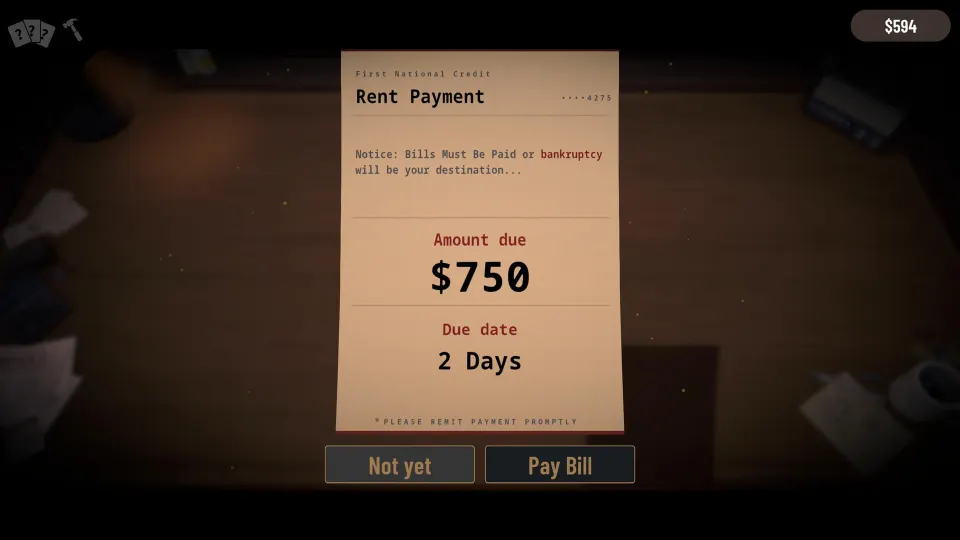
The core financial rule is simple: money needed for the next bill is not upgrade money. If you have $320 and a $200 bill is due soon, treat $120 as your usable budget unless an upgrade immediately changes your ability to earn.
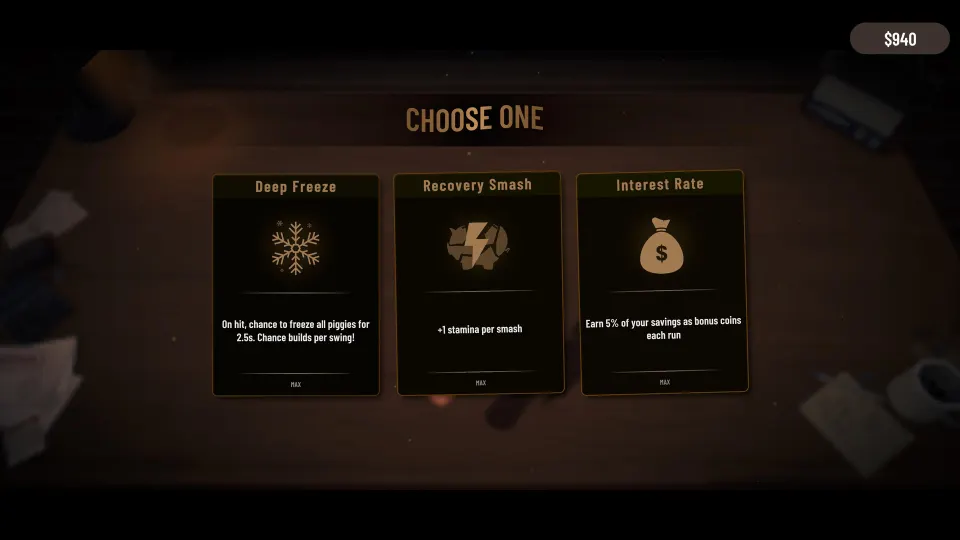
Paying bills advances progression and can offer helpful choices, but paying every bill early can slow a run. Early payment means fewer days to earn, improve the skill tree, and prepare for the next larger requirement. Use it when the reward materially changes your build or when you have enough surplus to avoid starving the following bill.
| Cycle stage | Main purpose | Spending priority |
|---|---|---|
| First cycle | Learn systems and establish Prestige | Basic damage, stamina, safe bills, easy accuracy goals |
| Second cycle | Improve permanent power and clear awkward goals | Rings or Bracelets that fix prior weaknesses; practical Hammer upgrades |
| Winning cycle | Reach the ending and unlock collections | Damage breakpoints, loot engines, late-game effects |
| Post-ending current cycle | Finish temporary completion objectives | Remaining skill tree, shop, piggies, King Piggy branches |
| Final reset | Complete permanent collection | Remaining Rings and Bracelets |
Bankruptcy is progression, not automatically failure. Paid bill value converts into Legacy Points, which purchase permanent jewelry. In practice, a controlled reset after several paid bills is often better than repeatedly attempting an income target that recent normal runs cannot approach.
Use Legacy Points to fix the weakness that actually stopped the previous cycle. If your hand tired with piggies left, prioritize permanent stamina. If the table was empty, favor starting-target effects. If durable piggies consumed the entire run, take permanent damage or crit support. Permanent loot helps most after you can already secure regular kills.
Before a final bankruptcy, finish objectives that reset: current Hammer unlocks, cash upgrades, gadgets, normal skill-tree progress, and piggy progression. Rings, Bracelets, and collected coins persist, so permanent purchases belong after you have squeezed value from the active cycle.
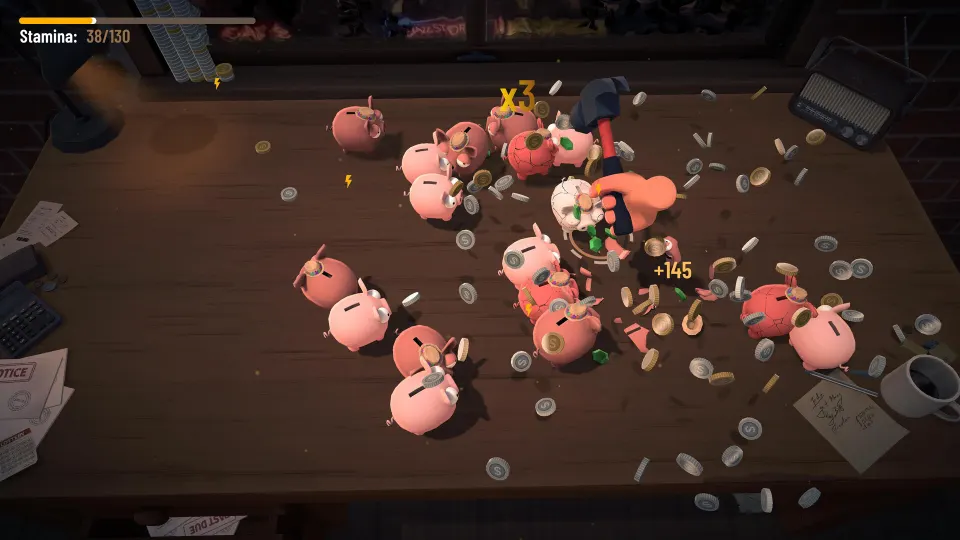
Late-game builds can become chaotic, with explosive effects, automatic kills, coin bursts, and powerful loot triggers. At that point, do not keep buying minor combat nodes merely because they are affordable. Prefer upgrades that improve kill count, payout value, or the remaining completion requirement.
FAQ
What is the best Bills Must Be Paid build?
The best Bills Must Be Paid build is a flexible balance of damage, targets, stamina, and loot. Start with damage, add stamina, then solve an empty desk with Starting Piggies or Spawn Rate. Move into Attack Speed and loot only after your basic kills are consistent.
Should I prioritize Attack Speed or Damage?
Choose Damage when piggies survive too many hits. Choose Attack Speed when most piggies already die quickly, the desk remains populated, and your stamina can sustain additional swings. Faster weak hits are usually worse than slower hits that actually finish targets.
When should I buy more Starting Piggies?
Buy more Starting Piggies when you clear available targets while stamina remains. If the desk stays crowded, do not add more targets; increase damage instead.
Is paying bills early always good?
No. Early payment can grant useful rewards, but it also removes time you could use to earn and upgrade before the next deadline. Pay early when the benefit matters or when your cash reserve is comfortably ahead of the next bill.
When should I declare bankruptcy?
Reset when the next bill is far beyond recent normal payouts and no realistic upgrade can close the gap. Try to pay one more safely reachable bill first, then spend the resulting Legacy Points on permanent upgrades that address the failed cycle’s bottleneck.