How the Skill Tree Helps You Pay Bills
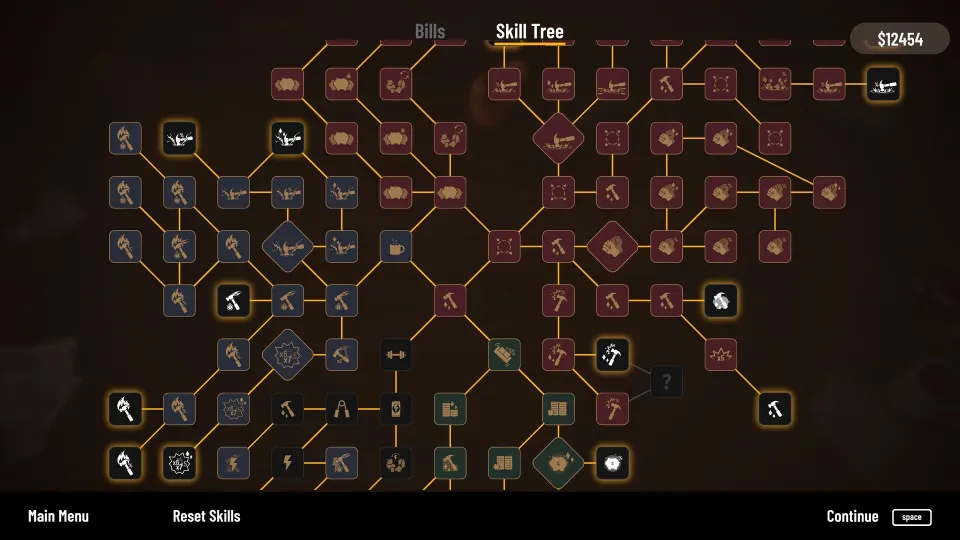
The skill tree matters because it determines whether each stamina-limited run produces enough cash to cover the next bill. In Bills Must Be Paid, stronger swings alone are not always the answer: an empty desk needs more piggies, while a crowded desk full of durable targets needs better damage.
Cash earned from smashing piggy banks can be spent on temporary run upgrades, including improvements to your hand, hammer performance, loot, and unusual abilities. These upgrades reset after bankruptcy, so every purchase should help either pay the current bill or extend the run enough to earn back its cost.
The developer describes the tree as having multiple paths. Known upgrade themes include grip strength, caffeine, gym training, wrist improvements, luck, rock rain, and an electrified hammer. That variety makes it more useful to diagnose a run’s problem than to blindly follow one fixed route.
| If this happens during a run | Your likely bottleneck | Useful upgrade direction |
|---|---|---|
| The desk becomes empty while stamina remains | Too few targets | Starting Piggies, spawn rate, target-creating effects |
| Piggies remain alive after several direct hits | Insufficient damage | Base damage, critical effects, stronger hammer |
| Several killable piggies remain when stamina ends | Not enough endurance | Maximum stamina, lower drain, stamina recovery |
| You clear targets but cannot afford future bills | Income is too low | Loot, luck, glowing piggies, Midas-style effects |
| One durable piggy blocks most of the desk | A damage breakpoint is missing | Hammer upgrade, damage, crit damage, special removal effects |
A good run balances four things: targets are available, current piggies die in a reasonable number of hits, stamina lasts long enough to use those targets, and each destruction pays enough to protect the bill reserve.
Main Upgrade Paths and Their Roles
The full current node list and every numerical effect have not been officially published in one complete reference. Still, the game clearly supports several meaningful upgrade directions that can be chosen according to the situation.
| Upgrade area | What it improves | Best time to prioritize it |
|---|---|---|
| Damage and grip strength | Direct hit power and kill speed | When new piggy types take too many hits |
| Attack speed and caffeine | Number of swings during a run | When targets die quickly and stamina can support more swings |
| Stamina and gym upgrades | How long the hand can keep smashing | When runs end with available piggies still on the desk |
| Starting Piggies and spawning | Number of targets available | When you finish the desk before stamina runs out |
| Loot and luck | Value and quality of rewards | After kills are reliable but bill growth outpaces income |
| Radius, collateral, and multi-target effects | Efficiency against clustered piggies | When several piggies regularly share the desk |
| Special abilities | Situational damage or automation | When their effect complements the current hammer and target density |
Attack speed is especially easy to overvalue. It feels immediately powerful because the hammer swings more often, but extra swings are wasted when the desk is empty or when each piggy requires too many hits. Faster weak hits can also drain stamina before the most valuable targets are destroyed.
Damage becomes more important whenever a newly unlocked piggy creates an obvious health wall. A stronger hammer may be worth more than several minor nodes if it reduces the number of hits needed per target. Hammers have tradeoffs among damage, critical chance, radius, and speed, so choose one that fits the build instead of treating every stat as equally valuable.
Luck and loot upgrades are usually stronger once basic clearing is stable. They improve the value of successful destruction, while early-game survival upgrades make those destructions possible in the first place.
A Practical Purchase Order
There is no universally best Bills Must Be Paid skill tree route, because the right purchase changes as piggy health, target availability, and bill costs change. The following order is a reliable starting framework rather than a mandatory sequence.
- Buy enough direct damage to avoid spending most of a run on the opening piggies.
- Add one stamina improvement so a productive desk does not end the run too quickly.
- Take Starting Piggies or spawning only after the desk starts running empty.
- Add radius, collateral damage, or multi-target effects once piggies frequently overlap.
- Revisit damage when a new piggy tier stops dying efficiently.
- Invest in loot and luck after the build can consistently clear available targets.
- Add attack speed when extra swings will have targets to hit and stamina to support them.
This order avoids a common early mistake: buying speed before the game provides enough targets. If only a few piggies appear at the start of a run, a fast hammer may simply wait for the next spawn. Starting Piggies and spawn effects create more opportunities for every other combat upgrade to matter.
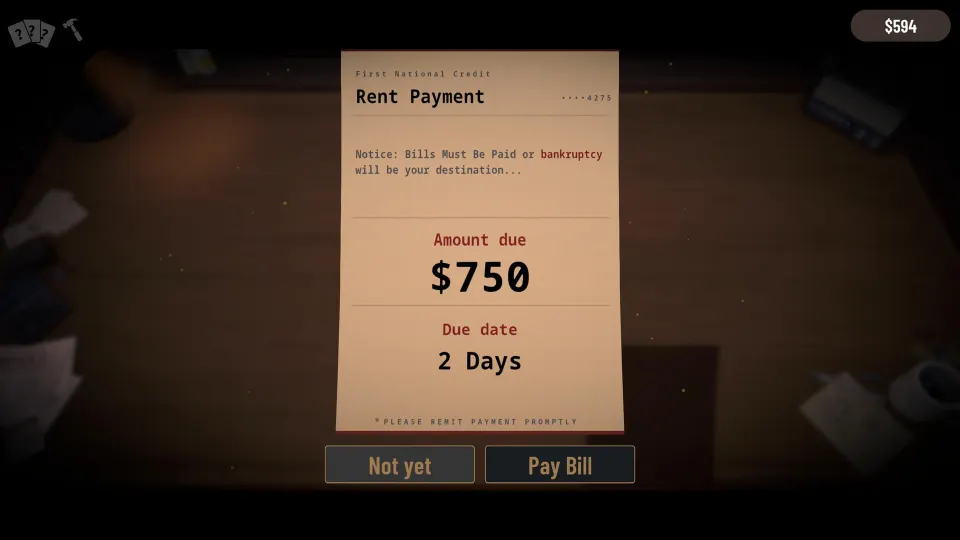
Keep money for the upcoming bill separate from money for upgrades. If you have enough cash to pay tomorrow’s bill, only spend the excess unless an upgrade creates an immediate and dependable improvement. A damage purchase that turns a three-hit piggy into a two-hit piggy can justify using more of the reserve; a speculative luck purchase usually cannot.
Adjusting Builds During a Cycle
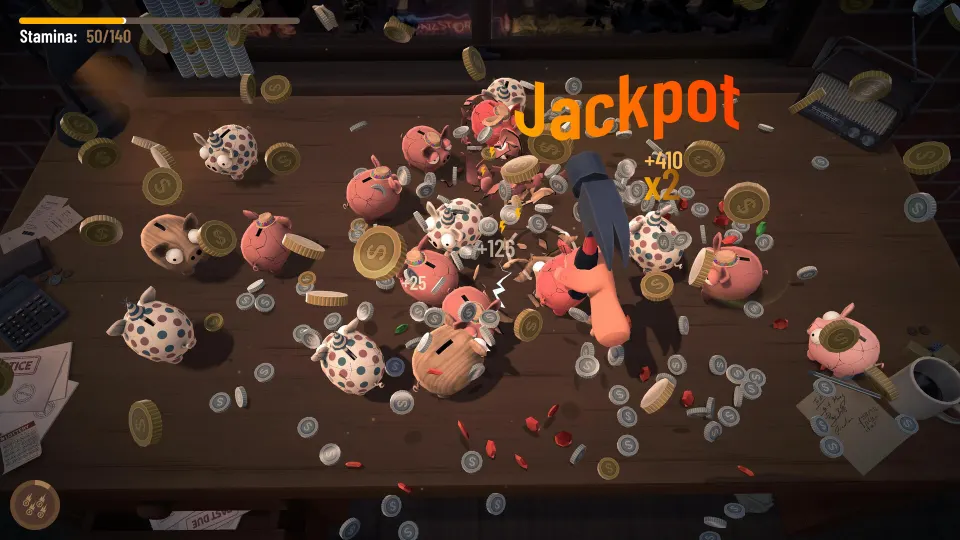
Check the results of ordinary runs rather than reacting to one jackpot. A lucky payout can conceal a weak build, while one poor run may not reveal a genuine problem. If the same limitation appears twice, it is usually worth steering the next purchases toward it.
| Run result | Recommended adjustment | Avoid for now |
|---|---|---|
| You one-shot most piggies, then wait for spawns | More starting piggies or spawn effects | More damage or attack speed |
| The desk stays packed and piggies survive | Damage, crit effects, or a hammer breakpoint | More spawns |
| You stop with targets remaining and no stamina | Stamina, drain reduction, or recovery | More starting piggies unless the desk was empty earlier |
| You clear reliably but bill costs keep rising | Loot, luck, better-value piggies, special income effects | Small combat upgrades with no income benefit |
| Targets cluster on the desk | Radius, collateral, explosions, or chain effects | Single-target-only improvements |
Special effects can make a build feel dramatically different. Rock rain, electrification, exploding coin bursts, chain effects, and other automated or area-based mechanics become more valuable when multiple piggies are present. They are less reliable as an early answer to a single high-health target unless they directly contribute enough damage to finish it.
Some bill-payment rewards also provide a choice among benefits. Paying bills early can accelerate progression, but it can also leave too little cash for the skill tree or for a loan repayment. Treat early payment bonuses as a strategic option, not an obligation. If paying early would prevent the next run from generating income, use the available days to strengthen the build first.
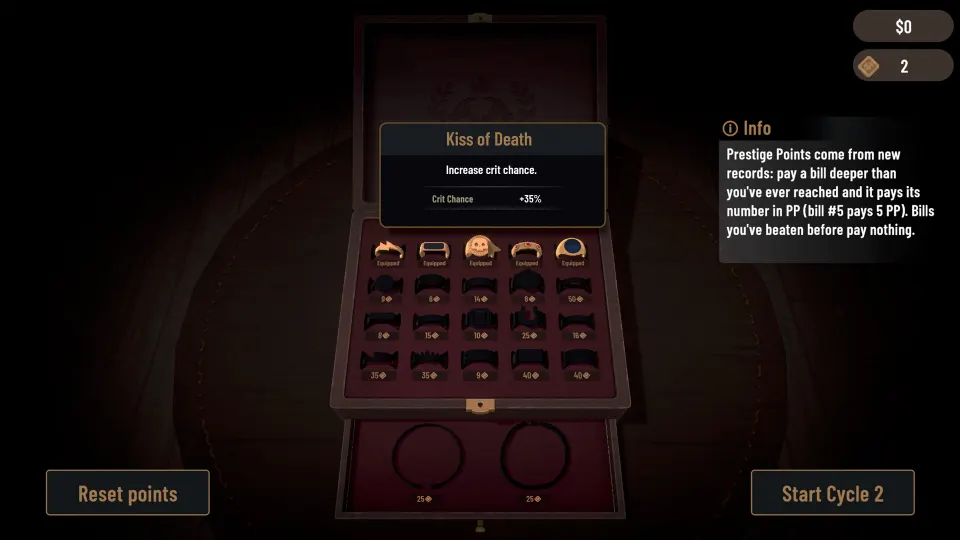
Bankruptcy resets the current hammer, cash, gadgets, skill tree progress, and piggy progression. Legacy Points earned by paying bills can instead be spent on permanent rings and bracelets. Those permanent bonuses make later cycles easier, so an early bankruptcy is not necessarily a failed save if the current bill math has become unrealistic.
The demo and full release should not be treated as identical. Some skill-tree nodes changed for the released game, alongside balance and other underlying systems. When comparing an older video or demo-era guide with your save, prioritize what is shown in the current version.
FAQ
What is the Bills Must Be Paid skill tree?
The Bills Must Be Paid skill tree is the run-based upgrade system used to improve smashing performance, stamina, piggy availability, loot, luck, and special hammer effects. Its benefits help generate enough money to pay bills before bankruptcy.
Should I buy attack speed first?
Usually no. Buy early attack speed only if piggies already die quickly, the desk stays populated, and stamina lasts long enough to use the added swings. If the desk empties, prioritize more targets; if piggies survive, prioritize damage.
Do skill-tree upgrades survive bankruptcy?
No. Current-run upgrades, cash, gadgets, hammer progress, and piggy progression reset after bankruptcy. Permanent progression comes from Legacy Points spent on rings and bracelets.
Is there one best skill-tree build?
No fixed build is best for every run. Adapt to the immediate bottleneck: damage for durable piggies, stamina for prematurely ended runs, spawning for an empty desk, and loot or luck when income falls behind bill costs.
Can I max every upgrade?
Buying every skill-tree upgrade is a completion objective associated with the Maxed Out achievement. Complete the main progression and inspect late-game branches before declaring a final bankruptcy, since current skill-tree progress does not carry into the next cycle.